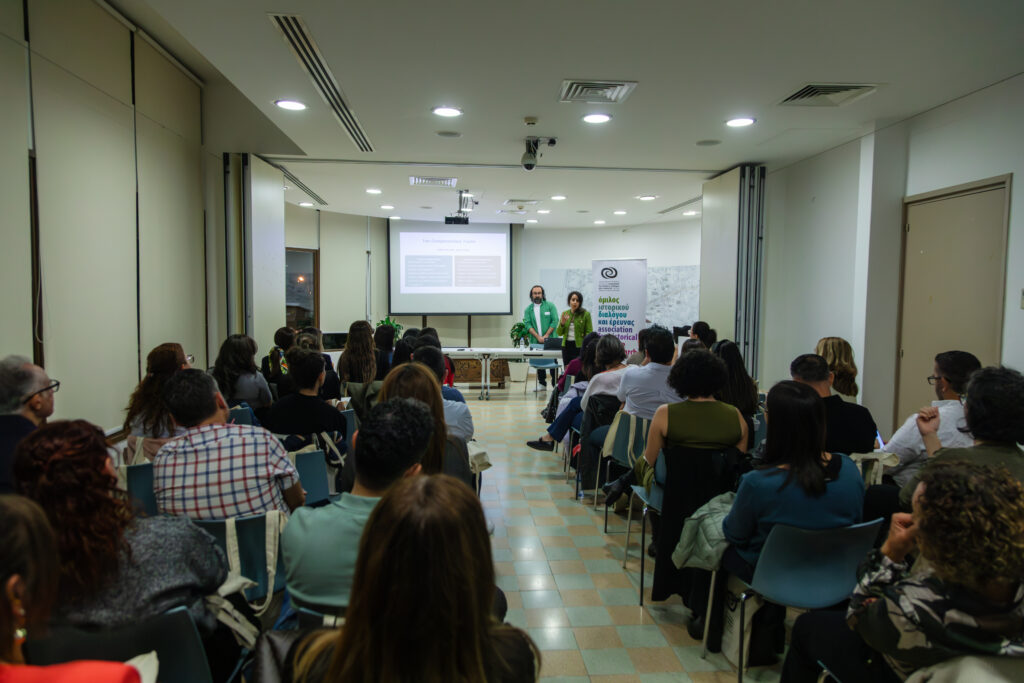
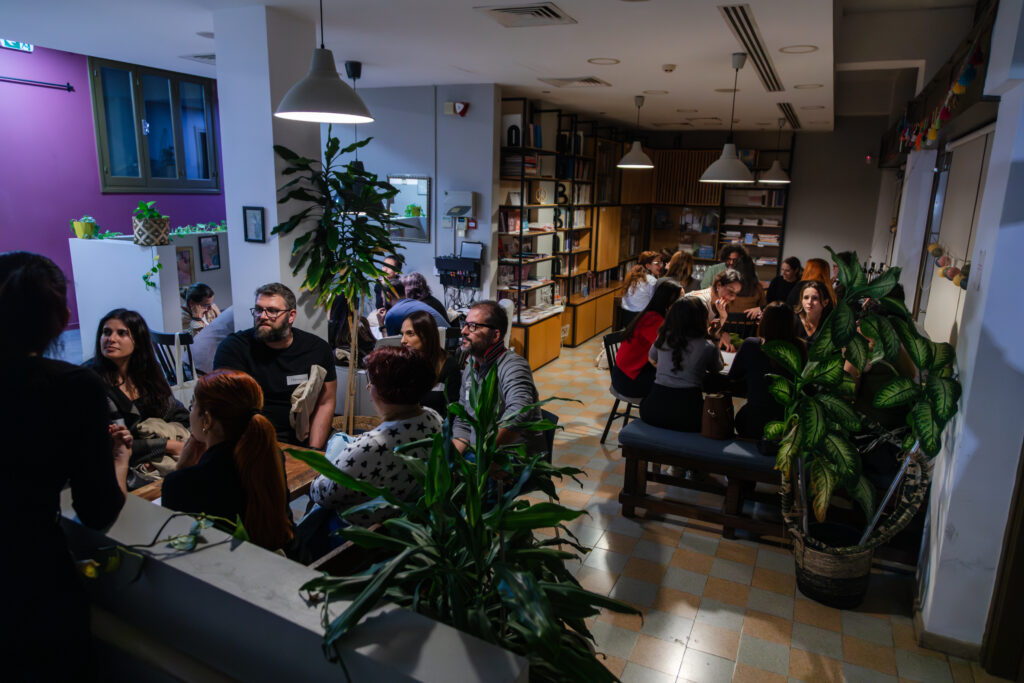
On 28 November 2025, the Association for Historical Dialogue and Research (AHDR) launched the Educational Ambassadors Network, bringing together 50 teachers and school leaders from both communities at the Home for Cooperation in Nicosia’s Buffer Zone. The initiative marks a significant shift in AHDR’s approach to educational engagement—moving from one-off training events to sustained partnership where educator expertise shapes policy recommendations.
Responding to Educator Demand
The network responds directly to requests from participants in AHDR’s Teacher Training and Peace Academy programmes, which engaged over 2800 educators only in the last 10 years. While these training sessions were valued, participants consistently expressed the need for ongoing collaboration, peer support, and sustained engagement with AHDR’s work.
The Educational Ambassadors Network represents a genuine partnership model. Rather than extracting educator input to plan AHDR’s activities, the network recognises that teachers and school leaders bring expertise and spheres of influence that can amplify AHDR’s existing work and inform how the organisation advocates for policy change.
Two Complementary Tracks
The network operates through two distinct but complementary tracks, recognising that teachers and school leaders occupy different positions within the educational system and can contribute unique perspectives and capacities.
Teacher Ambassadors drive classroom-level change by implementing historical dialogue methodologies in their daily teaching practice, mentoring colleagues, engaging students in cross-community understanding, and providing practical feedback on educational resources. Their direct experience with students gives them insight into what works in Cyprus classrooms.
Headteacher Ambassadors enable systemic transformation by championing whole-school approaches to peace education, establishing formal partnerships between schools across communities, allocating resources to support intercultural work, and representing AHDR in educational forums. Their institutional capacity and access to decision-makers positions them to advocate for sustainable structural change.
This differentiated approach creates a powerful dynamic: teachers innovate at the classroom level while school leaders create the institutional conditions that allow those innovations to take root and scale. Policy recommendations emerging from the network will be grounded in both pedagogical practice and strategic oversight.
Structure and Commitments
Network members commit to four quarterly meetings throughout the year, combining role-specific sessions with joint collaborative activities. This structure allows teachers to engage in focused pedagogical exchange while school leaders discuss institutional strategy, before bringing both groups together to build mutual understanding and align classroom practice with systemic advocacy.
Beyond the quarterly meetings, ambassadors champion AHDR’s mission within their schools and communities, disseminate educational materials, provide feedback on policy recommendations, and serve as advocates for intercultural understanding and reconciliation.
In return, AHDR provides educational resources and materials, creates platforms for educators’ voices in policy development, facilitates professional development opportunities, and offers recognition as educational leaders in peacebuilding.
Launch Event Engagement
The 28 November launch event featured a presentation on AHDR’s work, developments on the continuation of the ‘Imagine’ program and small group discussions that allowed participants to explore their specific roles and capacities. Teachers discussed classroom opportunities and practical support needs, while school leaders explored institutional capacities and strategic relationships. The energy and engagement from participants throughout the evening confirmed the appetite for this kind of sustained collaboration.
Facilitators from both communities led the discussions, with key themes emerging around the importance of peer learning, the need for resources that respond to Cyprus’s specific context, and the desire to connect classroom innovation with broader systemic advocacy.
Building on AHDR’s Mission
The Educational Ambassadors Network represents a continuation of AHDR’s long-standing commitment to building bridges through education. By creating safe spaces for dialogue, empowering educators, and connecting practitioner expertise with policy development, AHDR contributes to a more peaceful and interconnected society.
The network’s location at the Home for Cooperation in Nicosia’s Buffer Zone carries symbolic significance—a shared space where educators from both communities can meet as equals, focused on their shared commitment to cultivating a culture of peace and non-violence for all students in Cyprus.
Looking Ahead
The first quarter of network activity has focused on establishing strong relationships, clarifying roles and expectations, and beginning the substantive work of connecting classroom practice with policy advocacy. Subsequent meetings will deepen this work, with ambassadors increasingly taking ownership of the network’s direction and priorities.
The Educational Ambassadors Network demonstrates that sustainable change in education requires operating at multiple levels simultaneously—from individual classrooms to whole-school approaches to systemic policy advocacy. By bringing together teachers and school leaders in genuine partnership, AHDR is creating the conditions for transformation across Cyprus’s education system.